

Kugelis: The Potato's Finest Hour
There are roughly a thousand ways to cook a potato.
The French will bury it in cream. The Belgians will fry it twice. The Americans will smother it in cheese, bacon, and enough sour cream to stop a man's heart.
But somewhere in Lithuania, a grandmother is quietly preparing something that might put them all to shame.
It's called kugelis.
And if you've never had it, I almost envy you. Because you still have that first bite ahead of you.
Kugelis doesn't come from the world of white tablecloths and celebrity chefs. It comes from old kitchens, bitter winters, crowded dinner tables, and generations of people who understood that a good meal didn't require expensive ingredients. Just good ones, treated properly.
Potatoes. Onions. Eggs. Milk. Bacon.
Five humble ingredients with absolutely no business becoming something this magnificent.
It starts with a mountain of raw potatoes, freshly grated.
And when I say a mountain, I mean a mountain.
For generations, that meant somebody standing over a hand grater, working through pound after pound of potatoes, usually while the rest of the family conveniently found something else to do.

Every family seemed to have that one person who did the grating. And if you grew up in a Lithuanian household, you probably remember exactly who it was.
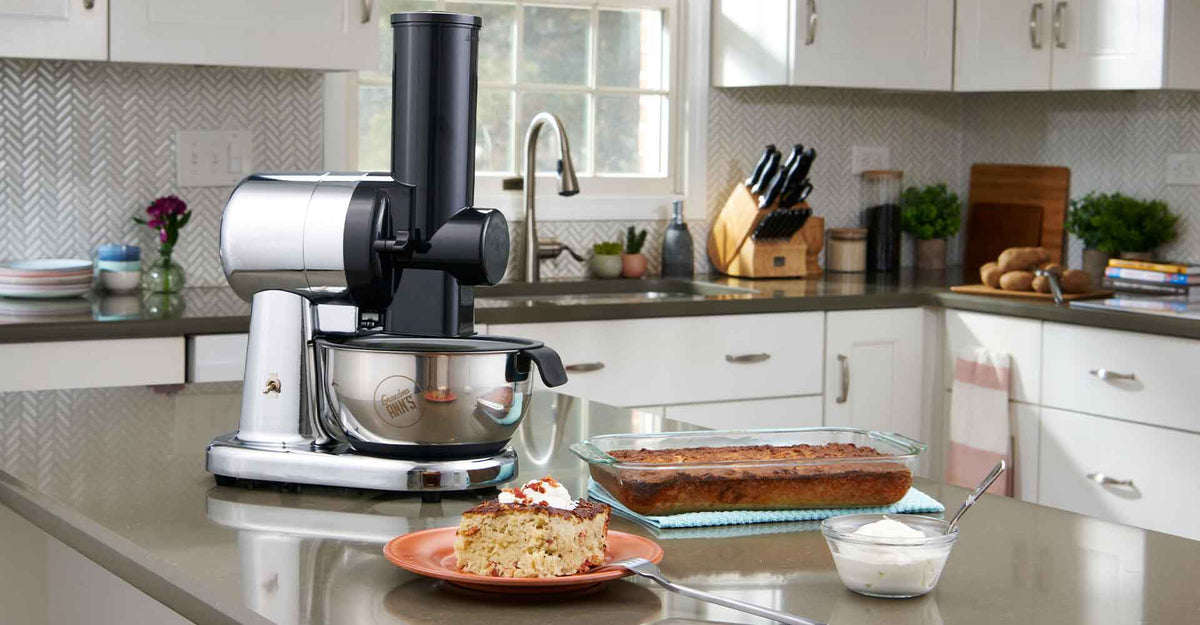
At Grandma Ann's, we have a particular appreciation for that part of the story. We believe the tradition belongs at the dinner table, not in the aching shoulders of whoever gets stuck grating the potatoes.
The potatoes still need to be freshly grated. The recipe still deserves to be made properly. We've just found a way to make that mountain of potatoes a whole lot less intimidating.
Because the real magic was never in the struggle.
It was always in what came next.
Onions join the freshly grated potatoes, followed by eggs, milk, and bacon that's been sizzling away in a skillet, surrendering every last drop of its smoky, salty goodness.
And that bacon fat?
You'd better believe it's going in too.
The whole mixture gets poured into a baking dish and sent into the oven, where the transformation begins.
Slowly, the kitchen fills with the smell of roasting potatoes, sweet onions, and smoky pork. The top develops a deep, burnished golden crust. The edges darken and crisp against the pan. Beneath that beautiful exterior, the potatoes become tender, rich, and almost custard-like.
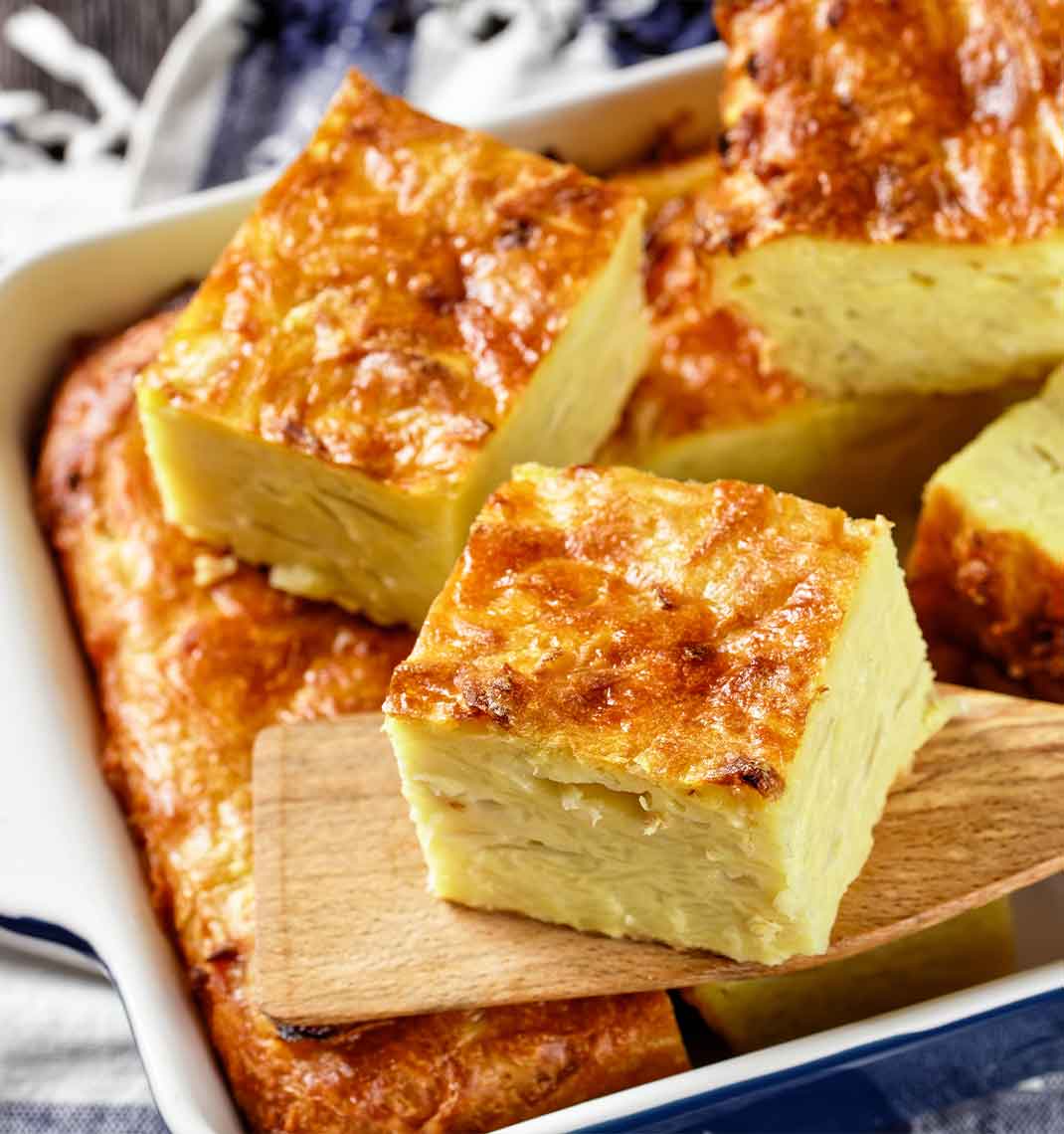
When it finally comes out, you cut yourself a generous square.
A proper square. Not some precious little architectural arrangement designed for a photograph.
You add a cold, generous spoonful of sour cream.
And you eat.
The crust gives way to that soft, savory center. There's the sweetness of onion, the unmistakable richness of bacon, and the wonderful earthy flavor of potato doing what potato does best.
It's rustic. It's substantial. It's spectacular.
It's the sort of food that makes conversation stop for a moment.
And yet, for all its glory straight from the oven, kugelis has one more trick up its sleeve.
The next morning.
Now, most leftovers are a compromise. A slightly disappointing reminder of something that was better yesterday.
Not kugelis.
Kugelis might be one of the few foods on earth that actually looks forward to spending a night in the refrigerator.
By morning, it's firmed up beautifully. You can cut it into thick, handsome slabs.
You put a heavy skillet on the stove.
And then you reach for the butter.
Not olive oil. Not cooking spray. Not some heart-healthy substitute invented by people who have apparently given up on happiness.
Butter.
A generous knob of the real thing.
It melts, foams, and begins to brown, filling the kitchen with that warm, nutty fragrance that should probably be bottled and sold as perfume.
Then you lower a thick slice of cold kugelis into the pan.
ssssssssssssssss.
That sound.
That beautiful, glorious sound.
And now comes the hardest part.
You leave it the hell alone.
Because something extraordinary is happening where that cold potato meets the hot butter.
A crust is forming.
Not just any crust. A deep golden, almost lace-like layer of crisp potato, enriched with browned butter and the smoky memory of yesterday's bacon.
You flip it.
The other side gets the same treatment.
And when you finally slide it onto a plate, you have something altogether different from what came out of the oven the night before.
Your fork breaks through the exterior with a delicate crunch. Inside, the potatoes are still soft and tender, the onions sweet, the bacon savory.
Hot, crisp, buttery kugelis meets a spoonful of cold sour cream.
And for one brief, magnificent moment, nothing else in the world matters.
No emails. No deadlines. No bills. No news.
Just you, a fork, and a plate of something so ridiculously good that you briefly consider whether sharing it was a terrible mistake.
This is the genius of traditional cooking. Of immigrant cooking. Of recipes carried across oceans, handed down through generations, and guarded by grandmothers who never needed to write anything down.
It's food born from necessity that somehow became a luxury.
Not the kind of luxury you buy.
The kind you inherit.
And maybe that's why kugelis matters.
Because behind every pan of it is a story. A family. A kitchen where somebody once stood grating potatoes by hand, knowing that the work would be worth it when everyone finally sat down together.
That's the part we love most at Grandma Ann's.
Not just the food itself, but everything that comes with it. The memories. The people. The recipes that somehow taste exactly the way you remember, even after decades have passed.
We make a machine that grates potatoes. That's what we do.
But what we really love is seeing those old family recipes continue to find their way onto dinner tables, without somebody having to spend half the morning hunched over a hand grater.
The ingredients haven't changed. The love hasn't changed. And the anticipation as that golden crust emerges from the oven certainly hasn't changed.
And, if you've got any sense, neither has the wonderful ritual the following morning.
A skillet.
A slab of leftover kugelis.
A scandalous amount of butter.
The first day, kugelis is comfort food.
The second day, fried in butter until the edges turn golden and crisp, it's a damn revelation.
And somewhere, a Lithuanian grandmother is smiling.
Because she knew that all along.
From our family at Grandma Ann's to yours — skanaus!

